Introduction
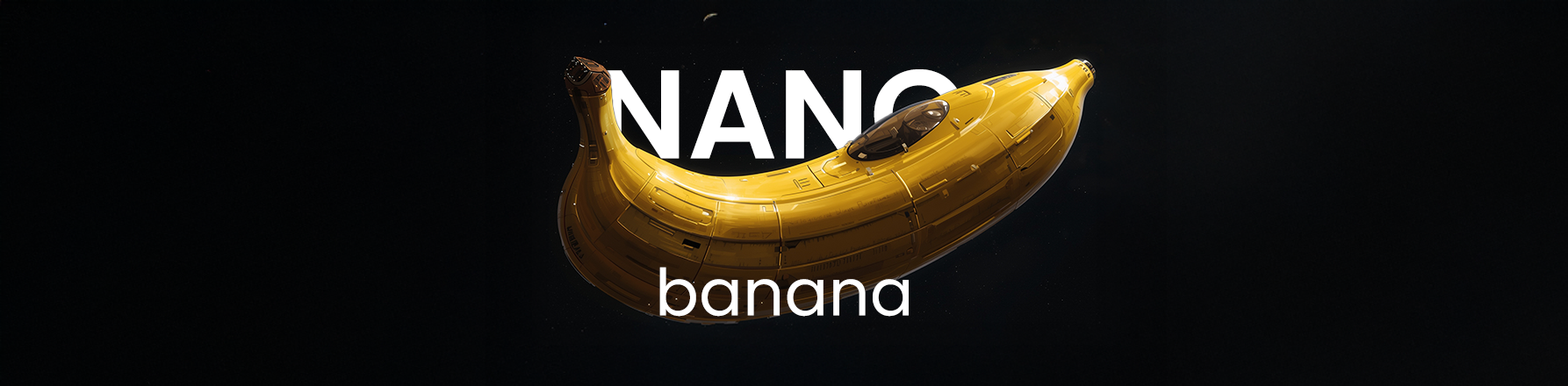
Google is known for surprising the world with unusual names for its projects. This time, it has gone bananas—literally. Nano Banana is the playful codename for Gemini 2.5 Flash Image, the company’s latest AI image generation and editing tool. Behind the humor lies serious innovation. For designers and creative studios like Das Design Studio, this new technology is set to change the way we create, edit, and share visuals.
What Is Nano Banana?
At its core, Nano Banana is a next-generation AI image model built into the Gemini app on web and mobile. With it, users can create or edit images simply by typing instructions in natural language. Instead of spending hours inside traditional photo-editing software, you can describe what you want, and Nano Banana does the heavy lifting.
Google explains more about its capabilities in the official Gemini 2.5 Flash Image announcement.
Key Features of Nano Banana
-
Consistency across edits – Characters and objects stay recognizable, even when changing outfits, backgrounds, or poses. This is a major leap forward compared to older AI tools.
-
Prompt-based control – By describing the edit in plain text, you can blur backgrounds, change lighting, remove objects, or restyle an image. For example, you can turn a sunny beach photo into a glowing night scene with just a single command.
-
Image merging – Nano Banana can combine multiple photos into one seamless design. Furthermore, textures, shadows, and reflections blend naturally, avoiding the uncanny look of older models.
-
Safety and transparency – All edited or AI-generated images include visible watermarks and invisible identifiers through Google’s SynthID system. Therefore, viewers can verify authenticity.
Why Does Nano Banana Matter for Designers?
For agencies and design teams, time and accuracy are critical. Nano Banana makes complex edits accessible in seconds. At Das Design Studio’s Graphics and Design Services, we often need to produce mockups, campaign visuals, and prototypes under tight deadlines. This tool can help us:
-
Generate product mockups instantly.
-
Produce multiple creative variations for social media ads.
-
Save time on background removal and retouching.
-
Maintain consistency across branding campaigns.
In addition, its ability to keep character likeness intact is especially valuable for marketing visuals, children’s book illustrations, and storytelling projects.
Real-World Adoption and Buzz
Since its release, Nano Banana has attracted millions of new Gemini app users. According to Android Central, the app gained over 10 million new users in just weeks. More than 200 million images have already been edited with the tool.
Tech experts are calling it a “Photoshop express.” TechRadar even noted that Nano Banana outperforms OpenAI’s latest image models in realism and consistency. On the other hand, some analysts at Fast Company warn that its ability to create near-perfect edits raises concerns about trust in digital media.
How Nano Banana Compares to Traditional Tools
Before Nano Banana, professional image editing often meant long hours with Photoshop or Illustrator. While those tools are still essential, AI-powered platforms are shifting the workflow. Instead of starting from scratch, designers now begin with AI-generated drafts and refine them.
Compared to older AI systems, Nano Banana has two main advantages:
-
Better consistency – The same character looks identical across multiple scenes.
-
Seamless merging – When combining two images, it produces photorealistic results instead of awkward composites.
For Das Design Studio, this doesn’t replace creativity—it amplifies it. We still need a designer’s eye for branding, layout, and storytelling. However, the process becomes faster and more efficient.
Ethical Considerations and Responsible Use
Like any new technology, Nano Banana comes with responsibilities. While it makes editing easy, it could also be misused for misinformation. Thankfully, Google added visible watermarks and invisible SynthID tagging to ensure accountability.
For studios, the lesson is clear: use AI responsibly. At Das Design Studio, we believe in transparency. If an image is AI-assisted, clients should know. This builds trust while still taking advantage of the speed and efficiency AI offers.
Future of AI in Design
What is Nano Banana teaching us about the future? That design is moving toward a collaboration between human creativity and AI efficiency. In the next few years, we expect tools like this to integrate more deeply into design software, making them as common as brushes and layers.
Studios that adopt AI early will be able to offer clients faster turnarounds, more creative variations, and flexible solutions. As a result, the design process becomes more about ideas and less about technical bottlenecks.
Conclusion
So, what is Nano Banana? It’s Google’s playful name for a powerful AI image editing tool that combines consistency, realism, and speed. For creative teams, it is not just another AI experiment—it’s a practical solution for everyday design work.
At Das Design Studio, we are exploring Nano Banana for mockups, campaigns, and storytelling visuals. By combining it with our expertise in Graphic Design, Programming and Tech, and Digital Marketing, we can deliver cutting-edge solutions to clients worldwide.
In conclusion, Nano Banana shows us the future of design: playful in spirit, powerful in function, and transformative in practice.